
Searching Bradley County Civil Dockets
No official countywide public civil-case search was found. Use the Bradley Circuit & Criminal Court Clerk page to identify Circuit Civil, General Sessions Civil, small claims, eviction, garnishment, and levy contacts. Chancery and probate requests go to the Clerk and Master. Juvenile Civil and orders of protection have a separate contact path.
Have a case number when possible. Otherwise supply the case caption or party name, approximate filing year, case type, and court division. Ask whether the clerk can confirm an existing docket, setting, inspection route, or copy process. Do not send a Chancery request to the constitutional County Clerk, whose work centers on other county records and services.
- Identify Circuit Civil, General Sessions Civil, Chancery, probate, or Juvenile Civil.
- Give the clerk the number, caption, subject, and approximate filing year.
- Ask for the existing docket sheet, index, next setting, or file-inspection route.
- Review filings, service events, motions, settings, orders, and the disposition separately.
- Confirm fees, redaction, delivery, and certification before ordering copies.
Bradley Civil Dockets Use Several Clerks
Circuit Civil is listed in Room 104 at the Bradley County Courthouse, with phone 423-728-7214. General Sessions Civil uses Rooms 204 and 206; small claims and evictions have a dedicated 423-728-7265 number. Garnishments and levies use 423-728-7216. The Clerk and Master route for Chancery and probate is Room 203, phone 423-728-7204.
This office map is more than a directory. A civil label can refer to debt, real estate, domestic relations, probate, a small claim, an eviction, or an order of protection. The office that owns the case determines where to confirm the Bradley County civil docket and what access limits apply.
General Sessions Civil is not simply another name for Circuit Civil. Chancery is also a separate trial court rather than a Circuit division. A probate, trust, divorce, conservatorship, or equity matter may belong with the Clerk and Master. A small-claims or eviction request should begin with the dedicated Sessions contact. Court ownership comes before the search method.
Inside a Bradley County Civil Docket
The docket is the dated index to the civil file. It may show the number, caption, court, filing date, pleadings, proof of service, motions, settings, orders, and final disposition. An entry such as “order entered” does not state every term, so obtain the signed order when its exact language matters.
| Case Number | A court-specific identifier; no single Bradley format was verified for publication. |
|---|---|
| Parties | The official caption and roles, subject to masking or restriction. |
| Filings | Petitions, complaints, answers, proof of service, and other indexed documents. |
| Motions and Settings | Requests for relief and the dates assigned to hear or review them. |
| Order or Judgment | The court's directive or result, which should be checked in the signed document. |
Bradley General Sessions Civil Jurisdiction
The Tennessee AOC General Sessions page explains that every county has General Sessions Court and that its civil and criminal jurisdiction varies under state law and private acts.
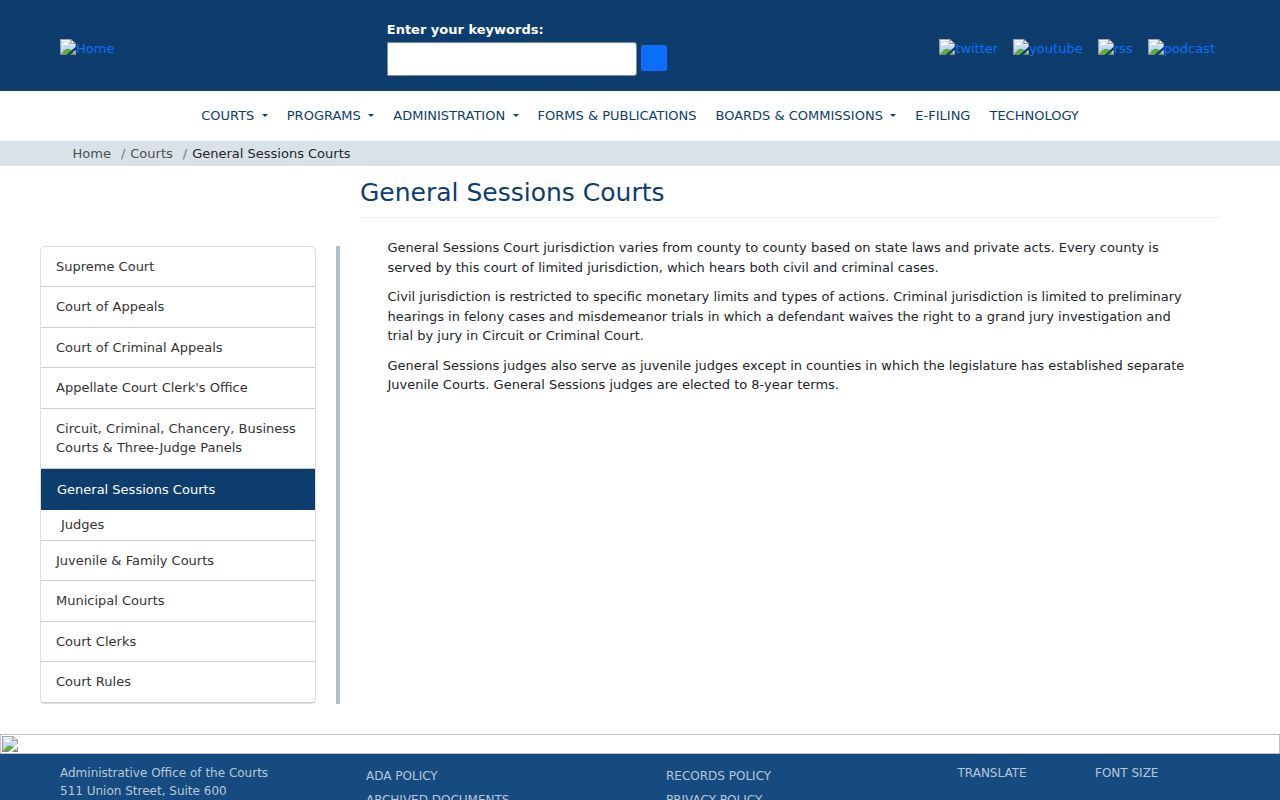
For Bradley, that means the dedicated Sessions, small-claims, and eviction contacts should be checked before assuming a filing belongs in Circuit Civil.
Civil Case Types on the Docket
Bradley's AOC reporting shows how broad the civil and Chancery field can be. The fiscal 2025 categories include domestic, property, debt, protective, and capacity-related matters. The category helps route a request, but it does not by itself prove which documents are public.
- Contract, debt, specific performance, damages, tort, and real-estate matters
- Divorce, parenting, child-support, and other domestic-relations cases
- Adoption, surrender, conservatorship, guardianship, probate, and trust matters
- Small claims, evictions, garnishments, levies, and limited civil matters
- Orders of protection and other files that may contain restricted information
Bradley Civil Docket Filing Context
The AOC fiscal 2025 civil and Chancery table reports 390 Bradley filings and 347 dispositions. Leading filing categories included divorce without minor children at 75, residential parenting or child support at 72, adoption or surrender at 50, divorce with minor children at 45, and conservatorship or guardianship at 41.
These are aggregate submissions, not unique people or a live index. The report's 267 non-jury-trial disposition entries should not be read as proof that every matter went through a contested bench trial. Use the individual docket and order for one case.
Other reported filing categories include 33 contract or debt matters, 27 real-estate matters, 23 miscellaneous civil matters, 12 orders of protection, five tort matters, and one judicial-hospitalization matter. A zero in an aggregate category is not proof that no related file could exist outside the report's scope or time span. Use the totals only as a dated view of AOC submissions.
Civil Docket Settings and Hearings
A setting can be a motion hearing, status conference, mediation-related event, parenting-plan hearing, conservatorship review, trial, or other court event. “Set” means scheduled, not decided. Continuances and later orders can change a date, so confirm it from the notice and the proper clerk.
No consolidated civil calendar was located. The Bradley County court dates overview explains why the Juvenile calendar, General Sessions rules, and division clerk contacts cannot be treated as one shared schedule.
A civil docket may record issuance or proof of service, a filed motion, a scheduled hearing, a continuance, and an order on different dates. The absence of one visible entry is not enough to decide whether service occurred or relief was granted. Ask for the docket through the latest entry and obtain the signed order when the exact ruling or deadline matters.
The type of setting can also point to the right Bradley office. A small-claims or eviction setting begins with the dedicated General Sessions contact, while a probate, trust, conservatorship, or equity setting may belong with the Clerk and Master. Circuit Civil questions go through Room 104's route. If the notice and a phone directory seem to conflict, read the court name and case number from the notice to the clerk rather than choosing an office solely from the word “civil.”
Bradley Civil Docket Electronic Filing
Tennessee Rule of Civil Procedure 5B permits electronic filing, signing, and service where local rules allow it.
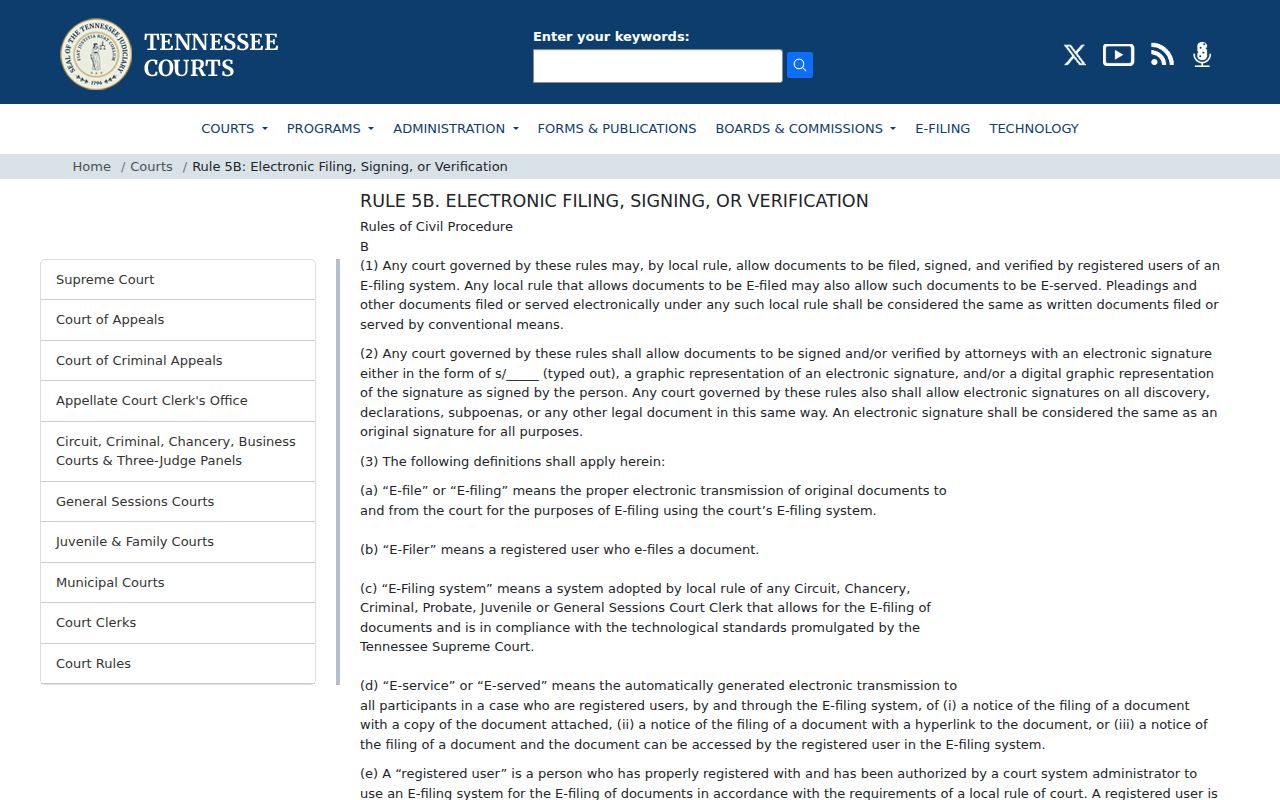
The rule gives electronic documents legal effect where adopted, but it does not create a public Bradley County civil docket download portal.
The court-managed Bradley electronic filing page is an official local route, though its procedure was not fully available during research.
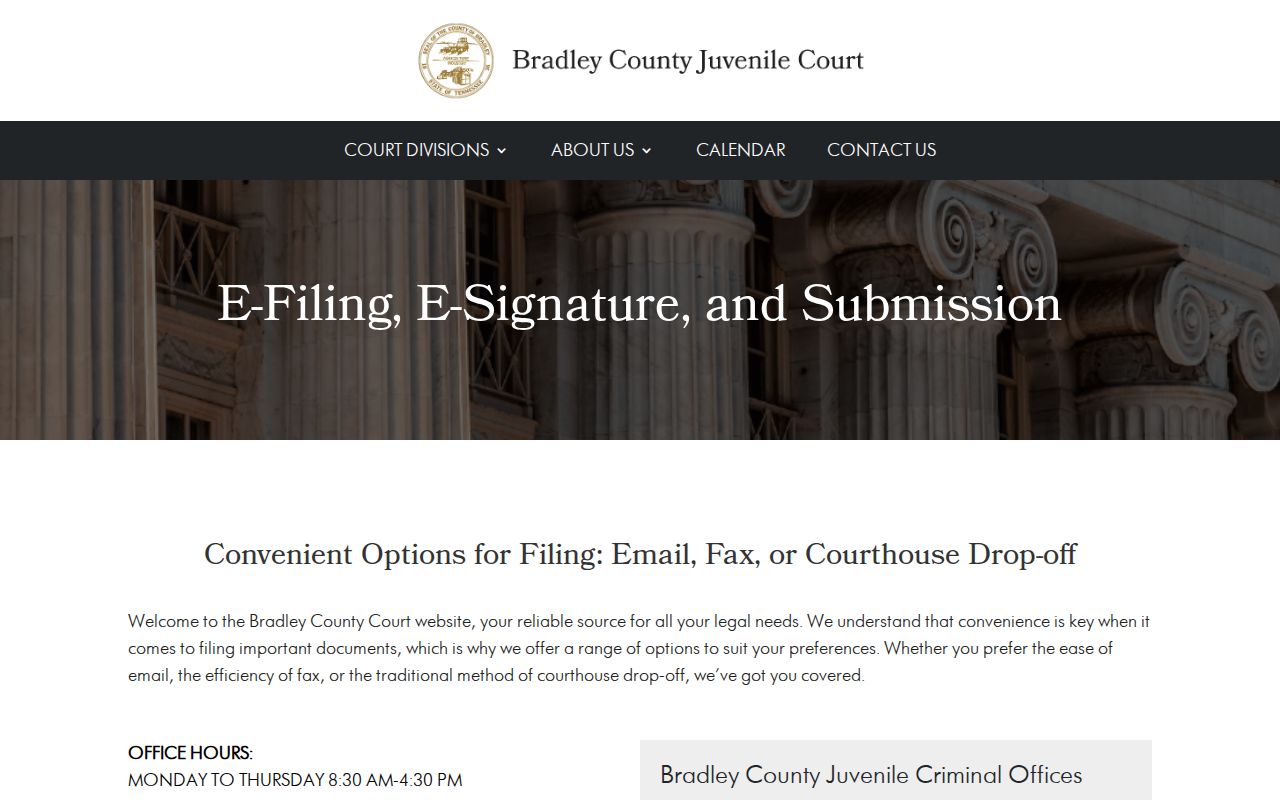
Confirm accepted case types and current submission steps with the receiving clerk instead of treating the page as a public search service.
Bradley Civil Docket Local Rules
Tennessee Supreme Court Rule 18 governs local trial-court rules and their relationship to statewide law.
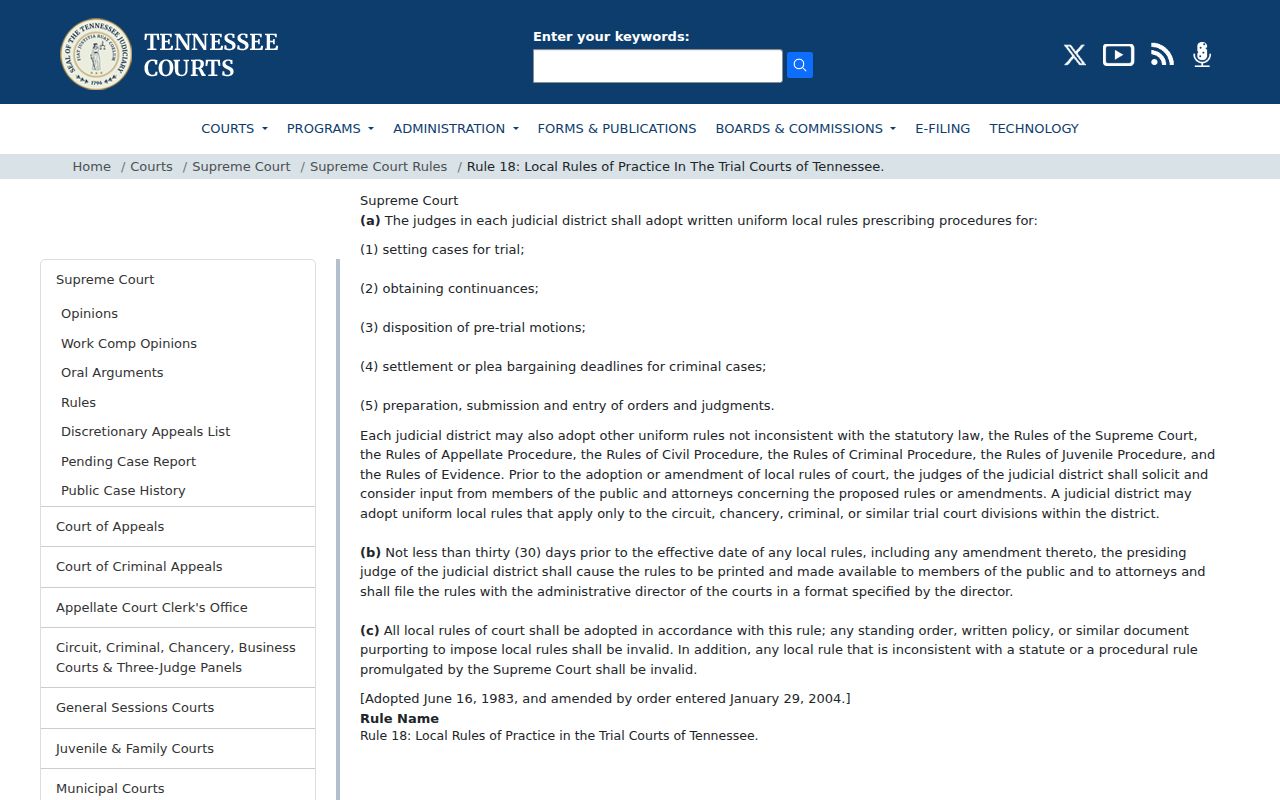
Bradley local rules can address settings, continuances, motions, remote participation, orders, and filing practice, but a division-specific rule must not be generalized to every civil court.
Rule 5.06 generally treats filing with the clerk as filing with the court unless a judge permits another arrangement. That makes the custodian the sound source for filing-status questions. Still, a published filing email should not be assumed to accept a records request or every document type. Confirm the case type, file format, signature method, fee, and deadline with the receiving division.
Civil Docket Access Rules
Rule 34 recognizes access to public court records while preserving statutes, court rules, protective orders, and sealing orders. Domestic, adoption, child, conservatorship, medical, financial, and protected-address material can require redaction or restriction. A visible entry does not make every exhibit open.
Access and copies:
Tennessee Supreme Court Rule 34 supports inspection of public records subject to exceptions and reasonable procedures.
No countywide certified-copy form, full fee schedule, or turnaround standard was found. Ask the custodian before ordering.
Inspection and copies are related but distinct. Ask whether an existing record can be inspected, whether a plain or certified copy is needed, how redactions are handled, and which delivery methods are available. Cleveland's city open-records rates do not establish fees for Bradley Circuit, Sessions, or Chancery files. The county sources did not publish a complete court-copy fee schedule, so the correct clerk must quote the current cost.
A clear request names the court and division first, then gives the full case number or caption, approximate year, and document. Specify whether the goal is to inspect the docket, receive a plain copy, obtain a certified judgment, or confirm a setting. Ask for the applicable written access policy and any estimate before staff begins copy work. If part of a record is restricted, request the non-exempt portion and the legal basis for withheld material. The clerk is not required to create a new analysis or reconstruct a report that does not exist.
Historical civil research can follow a different path. The Tennessee State Library and Archives Bradley finding aid includes older county, Chancery, probate, microfilm, and loose-case-file material. That archive is not a live civil status search. Use the current clerk for an active docket and the historical custodian for older records, giving each the court, names, record type, and time period needed to narrow the search.
Public access can differ within one file. The docket may identify that a petition, exhibit, or order exists while protected addresses, child information, medical material, financial details, or the document itself remains limited. Adoption, orders of protection, domestic relations, and guardianship matters call for careful requests. Ask whether the entry and the document are separately available, whether a redacted copy can be produced, and whether an authorized-party process applies. Never use an aggregate AOC category as a substitute for the court's access decision.