
How to Search Cases by Name
Bradley has no located countywide public trial name search. First identify the court from a notice, prior filing, charge, or subject. Then use the official clerk contact and provide the party name or case style, approximate year, and case type. A name alone may match several records, and the clerk may need more facts to find the right existing index.
- Identify Circuit, Criminal, General Sessions, Chancery, probate, juvenile, or municipal court.
- Use the official clerk page or AOC directory for that court.
- Give the full name or style, filing year, subject, and any known setting.
- Ask for the matching docket, status, next date, or inspection process.
| Field Label | Type | Required | Notes |
|---|---|---|---|
| Party or case style | Text | When number unknown | Use the spelling shown on court papers. |
| Court and division | Routing detail | Yes | Separates courts with different custodians. |
| Case type | Subject | Helpful | Examples include criminal, civil, probate, or municipal. |
| Approximate year | Date | Helpful | Narrows similar names and archival searches. |
Bradley Case Lookup Starts With the Clerk
The Tennessee AOC Find a Court Clerk guidance directs trial, warrant, arrest, probate, and court-record questions to the clerk for the county of origin.
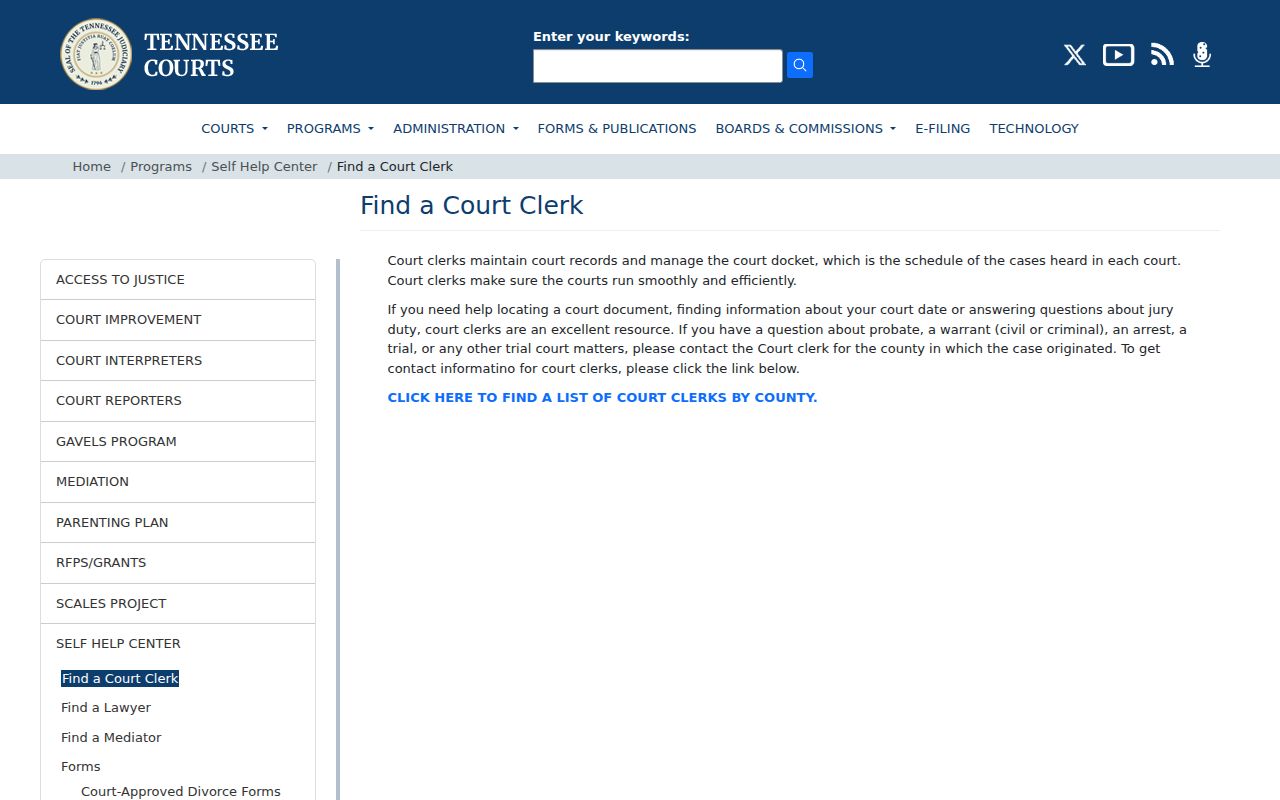
In Bradley, the route then splits among the Circuit & Criminal Court Clerk, Clerk and Master, Juvenile Court office, and separate city clerks.
Circuit Civil and General Sessions Civil questions generally lead to the North Ocoee courthouse. Adult felony and criminal matters lead to Blythe Avenue. Juvenile matters use Johnson Boulevard. Cleveland and Charleston city cases have separate municipal clerks. Building and custodian are therefore part of the search key, not details to add after a name match.
How to Search by Case Number
Copy the complete number exactly as it appears on a notice or filing and keep punctuation and prefixes. No single verified Bradley case-number format was published, so do not rebuild or guess missing segments. Use the complete court-assigned number with the court and division. A municipal citation number, trial number, and appellate number belong to different systems.
If the number yields no match, check the court name and filing year before switching to a party search. Ask whether the file is archived, restricted, or kept under a prior numbering practice. A reopened civil case generally keeps its docket number under AOC reporting rules.
No Bradley Countywide Trial Search
The official Bradley sources provide division contacts, addresses, and filing channels rather than a public person-by-person database. Quest Case Management Software is named in local rules, but back-office software does not prove that the public can search it. Local electronic filing also does not guarantee public downloads.
Best fallback: Name the court, supply the case number or party and year, and ask the correct clerk for an existing docket, index, setting, or copy route.
Use the official county clerk-of-court division page for Circuit, Criminal, and General Sessions contacts. Use the AOC directory for Clerk and Master or city-court contacts.
The county page lists separate numbers and filing emails for Circuit Criminal, General Sessions Criminal, Circuit Civil, small claims and evictions, Juvenile Civil and orders of protection, and garnishments and levies. Contact blocks differ from some AOC directory details. Verify the current office and method before sending a filing or relying on a phone number.
What a Case Search Shows
A confirmed result may provide an identifying number, case style, court, parties and roles, filing date, event history, settings, motions, orders, and status. Field names differ by court. A docket is an index and timeline, while the file holds the pleadings and signed orders behind those entries.
| Case Number | The identifier assigned by that court. |
|---|---|
| Style or Parties | The caption and roles, where public. |
| Case Type and Court | The subject and division that determine custody. |
| Filed Date and Events | The start date and later docket entries. |
| Status or Disposition | A label that must be read with the dated entry and order. |
Bradley Case Lookup: Cleveland Exception
Cleveland Municipal Court provides the clearest local public search exception. The official Cleveland citation portal offers citation number, license and state, SSN and date of birth, plate and state, name and date of birth, or business-name routes.
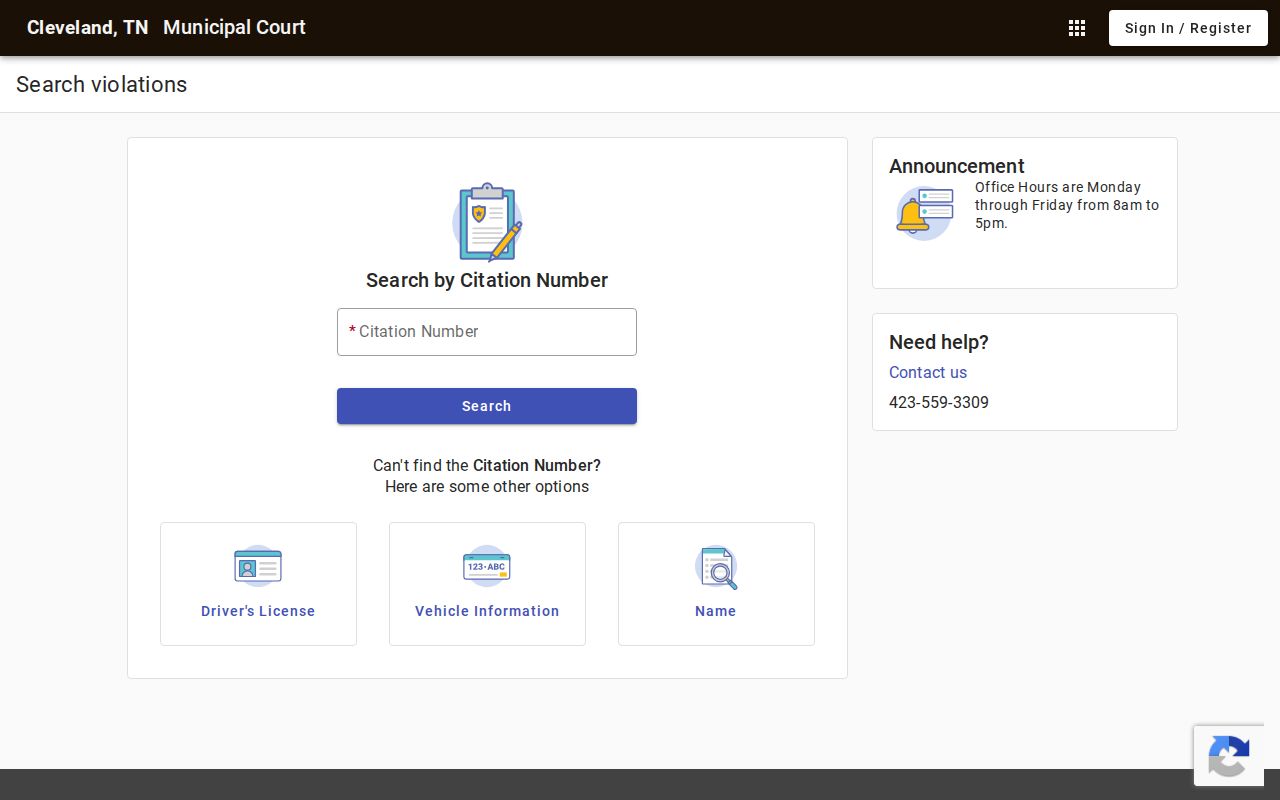
Prefer a citation number and use sensitive identifiers only when needed on the verified official portal. This search covers Cleveland municipal citations, not all Bradley trial cases.
The portal's official contact screen identifies the municipal service and clerk contact.
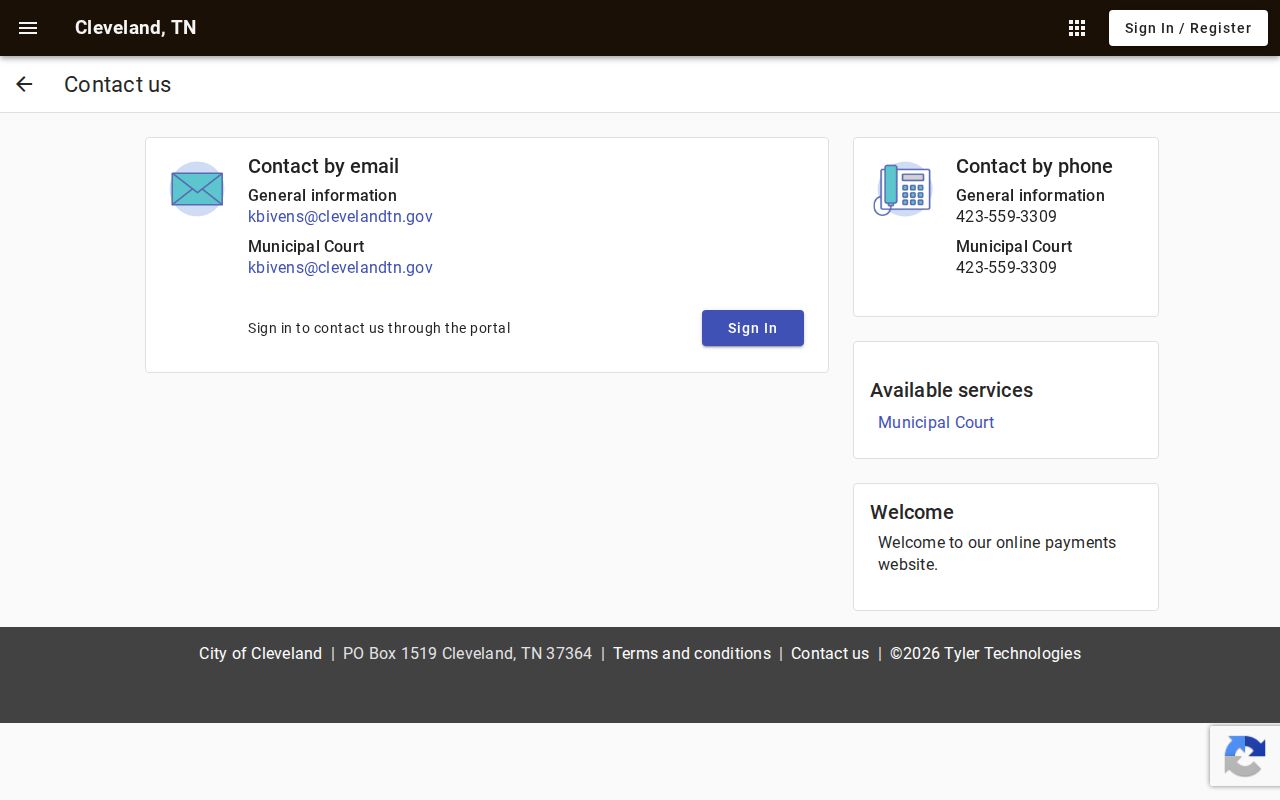
The contact source is the fallback when a citation search does not resolve the record or court date.
Charleston does not have a comparable official portal in the reviewed sources. Its AOC-listed City Court Clerk is Janet Newport at 423-336-1981 and P.O. Box 431. Call to confirm the court day, location, accepted identifiers, payment route, inspection process, and certification. The city's recreation calendar is not a court calendar.
The municipal split prevents a common lookup error. Cleveland's portal should not be used for a Charleston citation, and neither city route searches Bradley Circuit, Criminal, Chancery, General Sessions, or Juvenile matters. When a city search fails, check the issuing agency and court printed on the citation before moving to a county clerk. That check is more reliable than trying the same name across unrelated portals.
County vs Statewide Case Search
Tennessee AOC Public Case History, also called C-Track, covers Supreme Court, Court of Appeals, and Court of Criminal Appeals histories. It is not a statewide trial search. Use it only when a Bradley-origin case has entered the appellate system.
| AOC Public Case History | Bradley trial-court route |
|---|---|
| State appellate histories | Separate local clerks by court and division |
| Case number, style, party, business, advanced search | Case number, party or caption, year, and case type supplied to clerk |
| Best for a known appeal | Best for the original Bradley trial matter |
Bradley Appeals in Public Case History
The AOC Public Case History help page explains scope, date limits, document availability, and update timing.
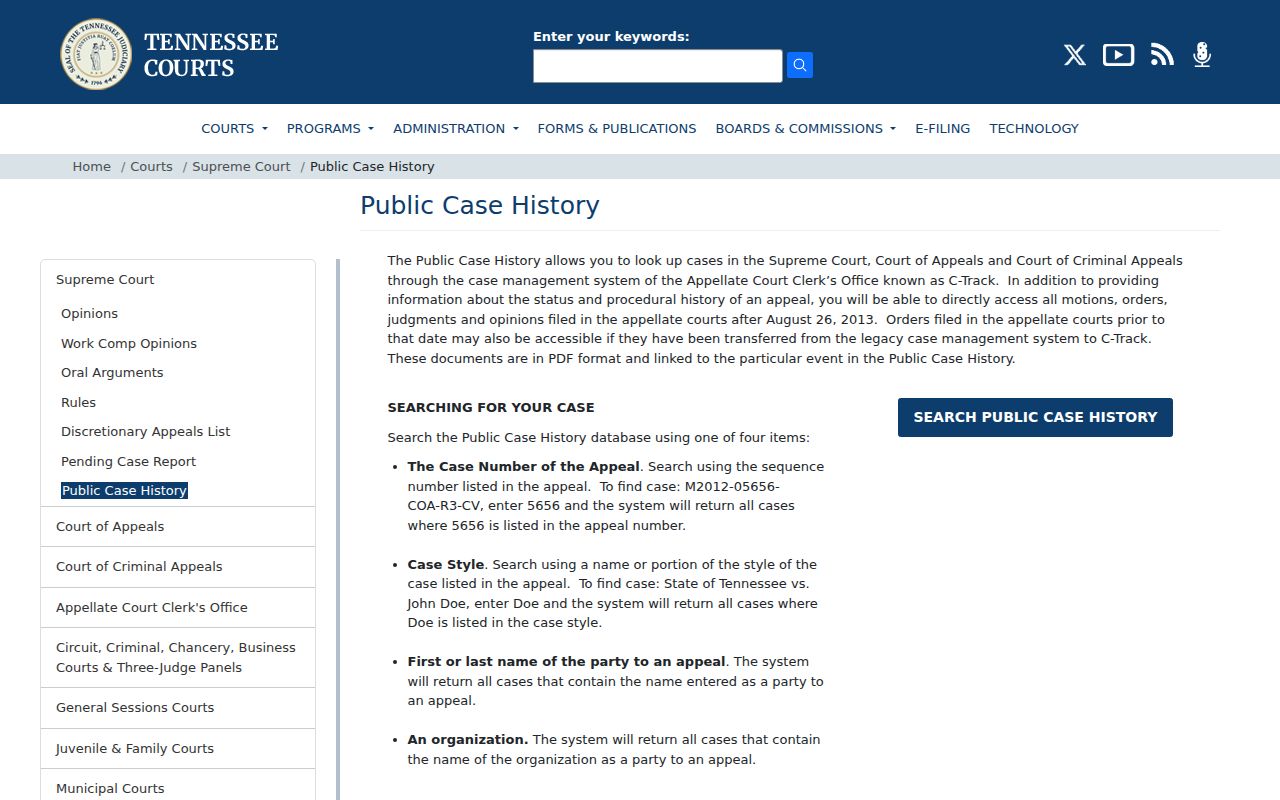
It says covered appeals generally have records filed after September 1, 2006, while documents after August 26, 2013 are generally available as PDFs.
The live appellate search exposes the search choices described in the research.
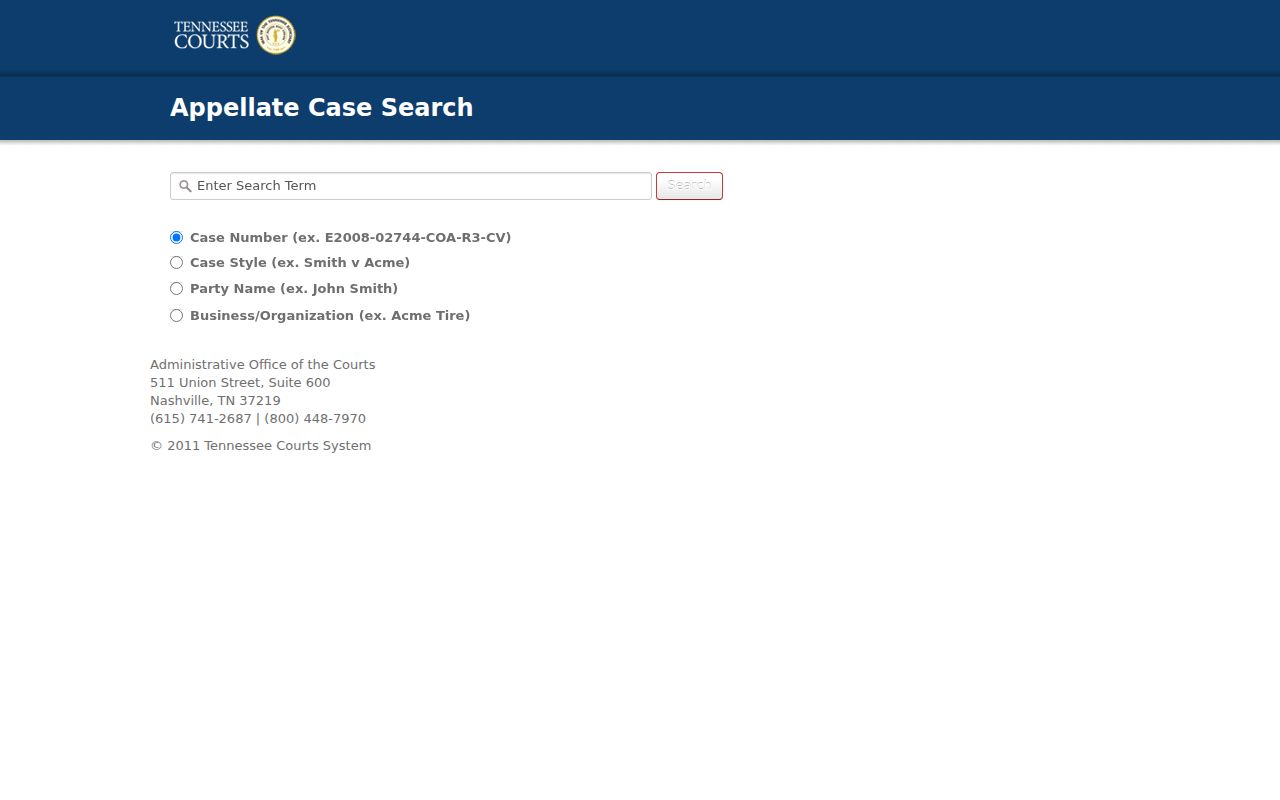
Current information can lag through the prior business day, so the Appellate Court Clerk remains the verification source.
The appellate detail can include a case overview, trial-court reference, milestones, parties and roles, counsel, and document history. It may offer PDFs within the documented date range. Those appellate fields should not be projected onto a Bradley trial clerk's records system. The original trial docket and appellate history are two layers of the same matter, held by different custodians.
Bradley Docket Search Versus Full File
A docket answers what was filed or scheduled and when. A full-file request seeks the complaint, petition, indictment, answer, motion, order, judgment, proof of service, transcript, recording, or exhibit behind the index. State the exact item, whether inspection or a copy is needed, and whether certification is required.
No Bradley countywide certified-copy request form, complete fee schedule, or turnaround standard was found. Ask the custodian about cost, payment, delivery, ID, redaction, and certification. The Bradley court record search explains those document distinctions in more depth.
Older Bradley material may follow an archival route. The Tennessee State Library and Archives finding aid includes loose case files and county, Chancery, and probate record material. An archival search and a live clerk lookup are not substitutes for each other. Give the historical custodian the court, parties, record type, and approximate period, while reserving current status questions for the present clerk.
Restricted Cases and Access Rules
Tennessee Supreme Court Rule 34 supports access to public court records but preserves statutory, rule-based, sealing, and protective-order limits. A case can have a public entry while a document, party detail, address, exhibit, or the whole file remains restricted or redacted.
Juvenile, adoption, victim, protected-person, medical, and financial information deserves special care. Do not infer that a missing name means no case exists. Ask the clerk whether the record is open, sealed, confidential, archived, or redacted, request any non-exempt part, and ask what process applies to an authorized party.
Case-search results also need careful reading. A setting is a scheduled event, not a decision. A continuance is a postponement, not a dismissal. A disposition label identifies how an event was reported but may not capture every term of the signed order. Party roles can change by case type, and a docket can show that a filing exists while the filing itself remains restricted. Preserve the entry date, court, and exact label rather than turning an abbreviation into a legal conclusion.
When the first clerk cannot locate a match, check the spelling, filing year, case number, and division before assuming the case is absent. Ask whether the file moved to Chancery, Criminal, Juvenile, a municipal court, the appellate system, or an archive. Federal district and bankruptcy matters use PACER and the Eastern District of Tennessee rather than Bradley state clerks. This court-first check keeps separate databases and custodians from producing a false negative.
Prepare a short lookup note before contacting an office: court or division, complete number, exact case style or party spelling, approximate filing year, case type, known setting date, and the specific record needed. State whether the request is for inspection, a plain copy, certification, or date confirmation. If the clerk identifies a fee or access limit, ask which written policy, rule, or order applies. This focused request follows Bradley's divided clerk structure and avoids asking an office to create a report that does not already exist.